



Skin Structure and Function
Epidermis, dermis, the protective barrier, and the skin’s core roles—its building blocks and daily work.
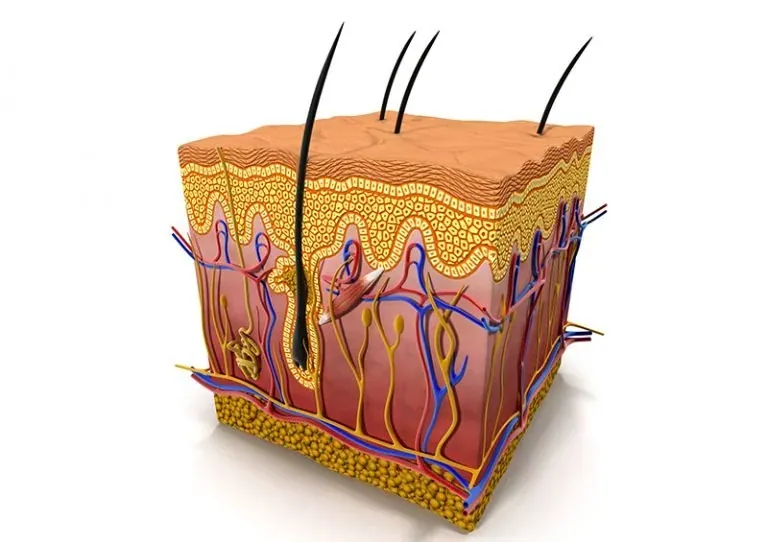
Skin is the largest organ in the body and protects it from harmful external factors. The skin is generally composed of two main layers.
Epidermis
This is the upper layer of the skin with multiple sub-layers. The outermost layer contains tightly packed dead cells called the stratum corneum, often referred to as the “tough layer” of the epidermis.
Cells in the stratum corneum act like a physical barrier that protects the body against the entry of harmful chemicals and microbes.
Dermis
This layer sits beneath the epidermis. Its function is to give the skin firmness and elasticity.
The dermis layer includes:
- Collagen protein fibers that strengthen the skin as key structural components.
- Elastin protein fibers that give the skin its elasticity.
- A gel-like substance (matrix gel) that helps retain water in the skin. The matrix is rich in polysaccharides. With age, “collagen biosynthesis” may be adversely affected, which can reduce the matrix gel and disrupt the skin’s specific structure. Together, these changes can cause thinning, laxity, and sagging—leading to the appearance of wrinkles.
Functions of the skin
Many sources describe skin functions under two categories: sensation and protection. However, Rejuline believes there is another important area in which the skin plays a leading role: characterisation and beauty. Skin color and type help us distinguish individuals.
Fingerprints are also part of the skin.
Some functions are listed below in more detail:
- Prevents dehydration
- Helps prevent infection
- Acts as a physical barrier against injury
- Protects against ultraviolet radiation injury
- Thermoregulation
- Metabolism: The skin has its own metabolic function. Approximately 20% of energy output can be allocated to metabolic changes.